 Check out our latest paper on the mineralization of soil organic matter in coastal wetlands. Coastal wetlands are mangrove forests and salt marshes at the interface where land meets the sea. Mangrove forests are located in the tropics, salt marshes with primarily herbaceous vegetation are found at cooler latitudes, and the two habitat types intergrade in the subtropics. These ecosystems store massive amounts of soil organic matter, the decaying remains of once-living material. The mineralization (i.e., complete decomposition) of this organic matter results in the loss of soil mass and a decline in soil elevation, rendering these ecosystems more vulnerable to sea level rise; releases carbon- and nitrogen-based greenhouse gases and pollutants to air and seawater; and yet supplies nutrients to coastal wetland vegetation.
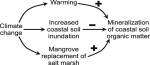
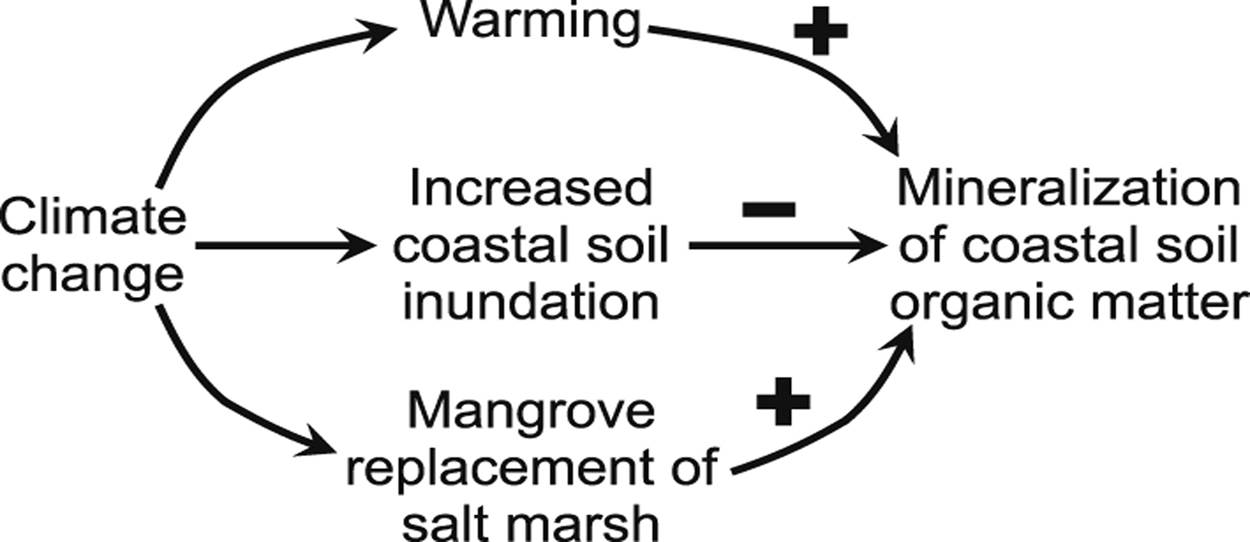
Given these important roles played by soil organic matter mineralization, we are interested in how mineralization in Florida’s subtropical coastal wetlands might respond to climate change. Climate change results in sea level rise and an increase in coastal soil inundation, warming, and the redistribution of plant species (the encroachment of mangrove forests into herbaceous salt marshes). An understanding of how climate change might affect organic matter mineralization must account for the response of mineralization to these three factors: increased tidal inundation (which should increase anoxia that suppresses mineralization), warming (which should stimulate mineralization), and changes in the plant species that produce organic matter.
Our new paper investigates how these factors interactively affect carbon (C) and nitrogen (N) mineralization in coastal wetland soils. Using both a field survey and laboratory experiment, we found C mineralization was increased by warming, but suppressed by soil saturation and prolonged inundation. However, C mineralization in inundated soil was extraordinarily sensitive to temperature, so the stimulation of C mineralization by warming may “win out” over the protection of soil C by prolonged inundation and soil saturation. Ecosystem type was important, too, as mangrove forest soil had higher “carbon quality” (more mineralization for a given amount of organic matter), while N mineralization was higher in salt marshes. The take-home message is that C and N mineralization in coastal wetlands will change with the alterations in soil water regime, temperature, and plant composition that accompany climate change.

 Viviana Penuela received a McKnight Doctoral Fellowship award, for tuition and stipend support for three years. Viviana’s successful proposal described her plan to investigate how the growing use of reclaimed water alters the chemical composition of soil, and may thereby affect soil microbiology, physics, and ultimately carbon and nitrogen sequestration. The title of her project was “Influences of reclaimed water irrigation on microbial processes and aggregates formation in urban soils,” an example of basic biogeochemistry set in an urban context. Viviana will conduct a comparative study between lawn management strategies (reclaimed vs. aquifer water irrigation) in urban soils. The samples will be taken from residential lawns irrigated with reclaimed water and from those irrigated with potable water. She will compare physical and microbial properties of the soil to better understand the effect of reclaimed water irrigation soil carbon and nutrient storage.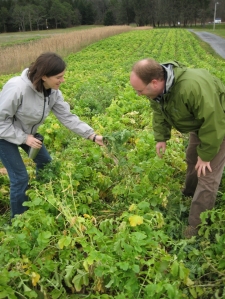
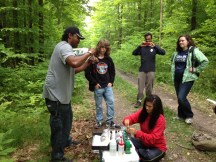 Along with teaching and research, outreach forms one of the priorities of the Lewis Lab. Outreach efforts include sharing discoveries with professional environmental managers, information sessions with the public, and e
 exchange and its sensitivity to wetland hydroperiod was recently highlighted in the “Research Spotl
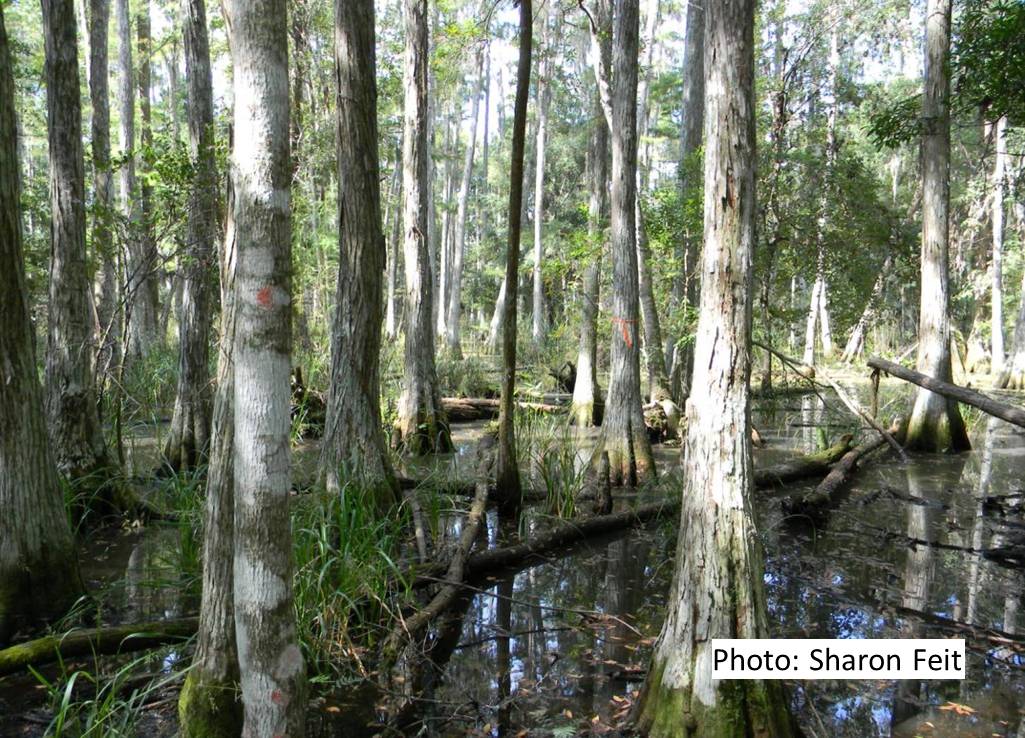
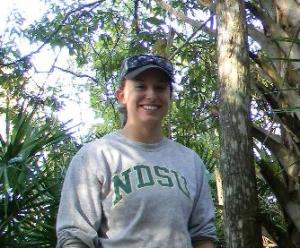 Congratulations to Sharon Feit on her new job. Sharon is a Natural Resource Specialist, with the Natural Resource Group in Minneapolis. Her primary roles are to make sure that oil and gas pipelines avoid federally-protected wetlands and endangered-species habitats, and to assist with wetland delineations and compliance with environmental regulations. Notably, Sharon got this job straight from doing her
 Ecosystems Lab at USF